Directors
Peter Strickland: ritual filmed with formal seriousness
By Imogen Strand, Art critic Published 27 August 2026 Updated 27 August 2026
- Person
- Peter Strickland
- Active
- 2000s to present
- Known for
- Films that treat fetish and ritual with formal seriousness
- Field
- Film
Peter Strickland films are unusual because they apply the full apparatus of art cinema to material that is usually handled as genre or as joke. Sound design carries as much narrative weight as dialogue, the surfaces are borrowed from 1970s European cinema, and rituals of every kind, erotic, professional and culinary, are filmed as work with rules rather than as spectacle. The results are precise, funny and often uncomfortable, and they have made him the reference point for filming this subject seriously.
Peter Strickland is a British director, born in 1973, whose released features run from 2009 to the present. He is on this list because of one film, and belongs on it because of all of them.
Everything below is drawn from the released work and from the craft approach he has described publicly in interviews. Nothing here concerns his private life, which is not the site’s business and not relevant to how the films operate.
The released run
Katalin Varga, from 2009, is a revenge story shot in Romania and the least stylised thing he has made. Berberian Sound Studio, from 2012, puts a mild British sound engineer inside an Italian horror production and never shows the film he is working on, only the noises made for it. The Duke of Burgundy followed in 2014. In Fabric, from 2018, treats a dress as a malignant object moving through a department store and a suburban life. Flux Gourmet, from 2022, places a collective of performance artists working with food and amplified cooking sounds inside a residency, which is a joke he has been building towards for a long time: he co-founded a group in the 1990s that made music out of cooking.
Seen together the run has an obvious through line. Every one of these films is about people who submit to a procedure. A sound engineer submits to a schedule and a genre. A shopper submits to a garment. A collective submits to its own aesthetic doctrine. A couple submits to a script they wrote. The erotic case is one instance of a general interest, which is why it is handled without the nervousness most directors bring to it.
Sound as the primary instrument
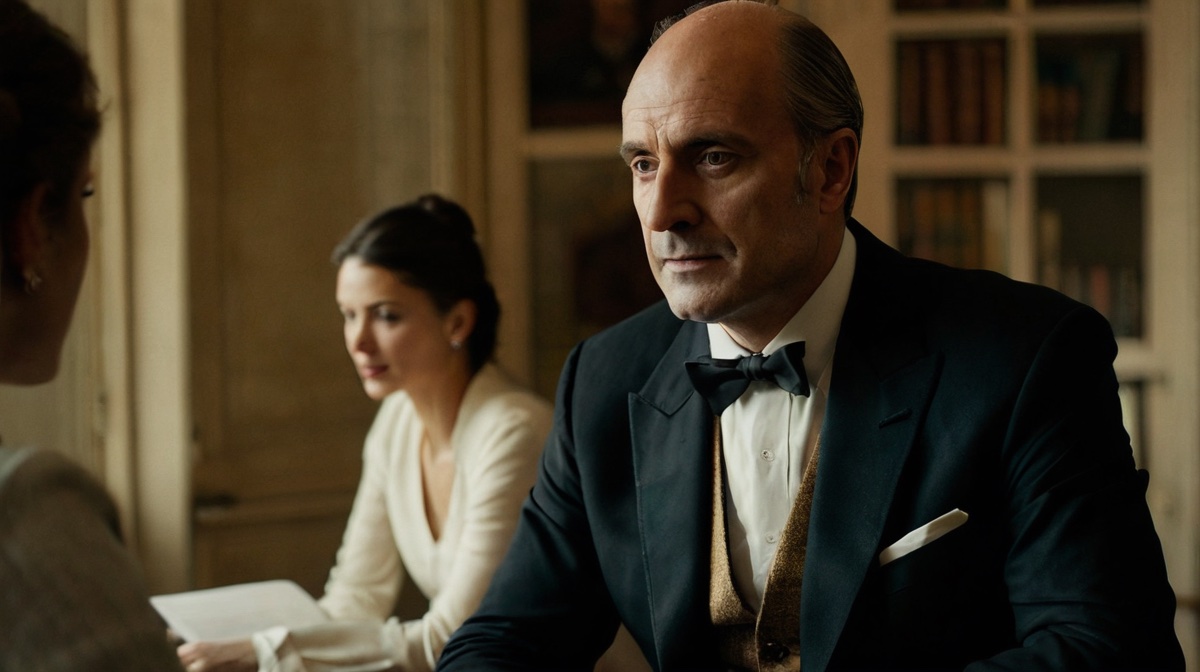
The consistent formal signature is that sound leads. Foley, insects, fabric, tape hiss, machinery, chewing: the mix is dense and deliberately foregrounded, and it frequently tells the audience something the image is declining to show.
For material like this, that choice has a specific consequence. A scene can be intense without being explicit, because the intensity is carried by what you hear and by what the cut refuses to give you. The Duke of Burgundy is the demonstration: almost nothing is shown, and the film is still one of the most charged treatments of the subject in modern cinema. It is the same principle that makes the withheld box in Belle de Jour more disturbing than anything Buñuel could have put inside it.
Borrowed surfaces, used precisely
His films look like other films on purpose. The reference is European genre cinema of the 1960s and 1970s: giallo, soft-focus erotica, library-music horror, elaborate credit sequences, dubbing-era textures and unplaceable locations.
Pastiche is usually a way of avoiding sincerity. He uses it the other way round. The borrowed surface sets an expectation about what kind of film this is and how seriously its people deserve to be taken, and then the film insists on taking them seriously anyway. That inversion is the engine of his best work, and it is the reason a film that looks like a 1970s erotic picture can end up being about the exhaustion of maintaining a relationship.
The same manoeuvre explains the comedy. His films are funny in the way an over-committed craftsman is funny, because everyone in them is doing their absurd job with total professionalism and nobody is winking. A performance collective conducts its internal disputes with total gravity. A shop assistant delivers sales patter as liturgy. A couple rehearses. The camera never steps back to reassure the audience that the director finds this ridiculous, and the refusal to step back is what keeps the films from curdling into mockery.
Why the approach matters for this subject
Most screen treatments of power exchange choose one of three registers: pathology, thriller or comedy at the characters’ expense. Strickland found a fourth, which is to treat the arrangement as a practice with craft, logistics and failure modes, and to give it the formal care a film would normally reserve for grief or war. Television has since arrived at a fifth by sheer attrition, which is to run long enough that the arrangement stops registering as an event at all: Billions carried a submissive lead through eighty-four episodes and did not make it a plot until the fortieth.
The effect on a viewer is straightforward. When a film respects the procedure, the audience stops evaluating whether the people are strange and starts watching whether the thing they are attempting is working. That shift is exactly what the method in how to read a picture of power asks of anyone looking at a still image: describe what the composition is doing before deciding what you think of the subject.
Questions readers ask
Which films has Peter Strickland directed?
His released features are Katalin Varga in 2009, Berberian Sound Studio in 2012, The Duke of Burgundy in 2014, In Fabric in 2018 and Flux Gourmet in 2022, alongside shorter work. They look very different from one another on the surface and share a method underneath: sound as a primary storytelling instrument, a heightened borrowed style, and a subject treated as a set of procedures with their own internal logic.
Why does sound matter so much in his films?
Because he uses it to carry information the image withholds. Berberian Sound Studio is set inside a post-production studio and is essentially a film about the manufacture of sound, and the technique carries into everything else: insects, fabric, machinery and kitchen noise are foregrounded until they become oppressive or absurd. Where another director would show, he amplifies, which is also why his handling of erotic material can be intense without being explicit.
Is The Duke of Burgundy the only one about power exchange?
It is the one built entirely around it. The others circle the same interests from other directions: obsession, submission to a craft, appetite, and the rules people invent and then have to keep. Watching the run in order makes clear that the dominant and submissive relationship in The Duke of Burgundy is not a departure for him. It is the same fascination with ritual, applied to a couple.
The subject of the picture had a say
Every image described here was made with somebody who agreed to be in it. That agreement is the part nobody photographs.
See where it happens now