Photographers
Helmut Newton: the long argument about the powerful woman
By Rasmus Øyen, Photography writer Published 26 August 2026 Updated 26 August 2026
- Person
- Helmut Newton
- Active
- 1950s to 2004
- Known for
- Fashion photography built on dominant, self-possessed women
- Field
- Photography
The Helmut Newton dominant women question has two serious answers and no agreed one. He was a fashion photographer who built a recurring figure across four decades: tall, composed, expensively dressed or undressed, standing in a hotel corridor or beside a pool, looking straight at the camera without deference. One reading says he handed women authority the fashion image had never given them. The other says he arranged their bodies for a male client and called the arrangement power. Both readings survive contact with the pictures.
Helmut Newton was born Helmut Neustaedter in Berlin in 1920, into a Jewish family, and was apprenticed as a teenager to the Berlin photographer known professionally as Yva. He left Germany in 1938. The route took him through Singapore to Australia, where he changed his name, and by the 1960s he was working in Paris, mainly for French Vogue. He died in Los Angeles in 2004 following a car crash.
That biography is worth stating because his imagery is often discussed as if it arrived from nowhere. It did not. It comes out of the Weimar studio tradition he trained in, out of decades of commercial magazine work, and out of a career made in the specific economy of Paris fashion.
The technique, described plainly
The pictures are easy to identify and the method is not complicated. Hard, direct flash. Deep focus, so the background is as sharp as the subject. Real locations rather than seamless paper: hotel corridors, swimming pools, garages, apartments with expensive furniture, streets at night. Wide framing that includes the room. Colour that looks slightly artificial, or high-contrast black and white.
The formal consequence of those choices is that his subjects are placed in a world instead of floating in a studio void. They occupy architecture. They stand rather than recline. They are frequently shot from a low or level position, which is the oldest trick in the book for making a figure monumental, and it is precisely the trick the passes in how to read a picture of power are designed to catch.
The Big Nudes, the series of near life-size standing figures, is the clearest statement of it. A body at that scale, upright, frontal, looking out, is not doing what a fashion nude of the previous generation did. His first book, White Women, appeared in 1976, and the oversized Sumo volume of 1999 made the work into an object as excessive as its reputation.
The recurring figure
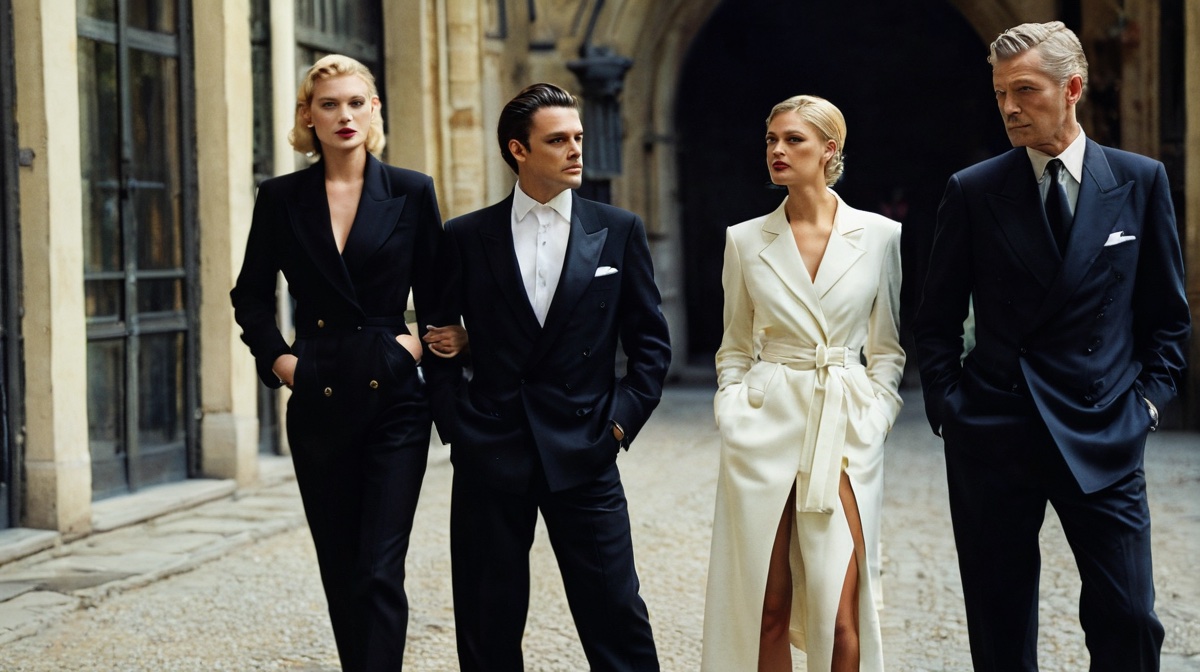
Across four decades one character keeps reappearing. She is tall. She is self-possessed. She is often the only person in the frame who appears to have decided anything. Where a man appears he is regularly the smaller presence, the servant, the observer, or absent from the shot but implied by it.
This is the figure that put Newton into any discussion of power in the photographic image. It is also where the disagreement starts, because the same picture supports two descriptions. She commands the space, or she has been placed there. She looks back at you, or she has been arranged to look back at you because that is what the client wanted this season.
Both readings, stated fairly
The defence: fashion photography before him was overwhelmingly a record of compliance, and he replaced it with a woman who does not appear to need approval. That is a substantive change to a commercial visual language seen by millions, and several of the women who worked with him have said publicly that the sessions were collaborative and the results flattering in a way that had nothing to do with prettiness.
The objection: authority in a photograph is a pose like any other. The clothes were being sold, the audience was assumed, and dressing a model in the signs of dominance does not transfer any dominance to her. Susan Sontag, among others, pressed exactly this point at him in public, and it has been restated by every generation of critics since.
Both readings can be held by a careful viewer at once, which is unsatisfying and probably correct. What can be said without dispute is that the props travelled. The heels, the harness, the gloves and the riding crop entered mainstream fashion imagery through work like his, detached from any context in which those objects mean something to the people who use them. Story of O supplied the interiors for the same borrowing a year or two earlier. Between the film and the magazines, a subculture became a styling reference.
Why he belongs in this section
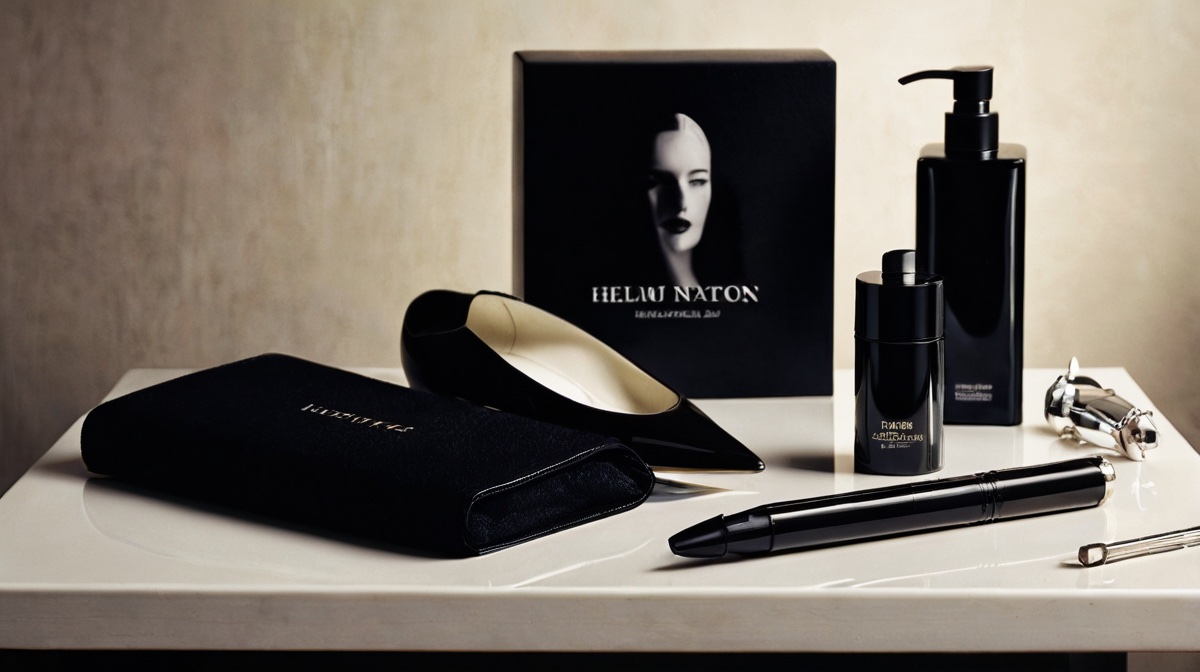
Because he is the clearest case in photography of an image of power that is also a commodity, and because the argument about him is a template for the argument about everything else here. He is the studio-controlled opposite of the documentary tradition, and the contrast with Robert Mapplethorpe is instructive: two photographers of similar formal appetite, one making pictures inside a subculture he belonged to, the other making pictures of a fantasy for a magazine. The studies in this site’s gallery are closer to the second than the first, and the wall labels there say so.
Questions readers ask
What did Helmut Newton actually photograph?
Fashion, for most of his working life, and mainly for magazines. He worked extensively for French Vogue from the 1960s onward, and the personal work grew out of the commissions rather than beside them. That commercial base is the fact most often left out of the argument about him. These are pictures made to sell clothes, in a business with clients and art directors, and any account of the work that treats them as free-standing statements is missing half the explanation.
What is the case against the work?
That the power in the pictures is a costume. Critics argue that the women are posed, styled and lit for a viewer who is presumed male, that the props of dominance decorate rather than describe any actual authority, and that a photograph can flatter a subject while still delivering her body to the market. Susan Sontag was among the writers who challenged him publicly on this, and the objection has never gone away.
What is the case for it?
That the figure he invented was genuinely new in fashion, and that it was not passive. His women are usually upright, frequently taller than the men in frame, unsmiling, and returning the camera look without invitation. Several of the models and editors who worked with him have defended the pictures as collaborative and as a relief from the compliant poses that surrounded them. The work also has an unmistakable strangeness that pure commerce does not require.
The subject of the picture had a say
Every image described here was made with somebody who agreed to be in it. That agreement is the part nobody photographs.
See where it happens now