Portrait
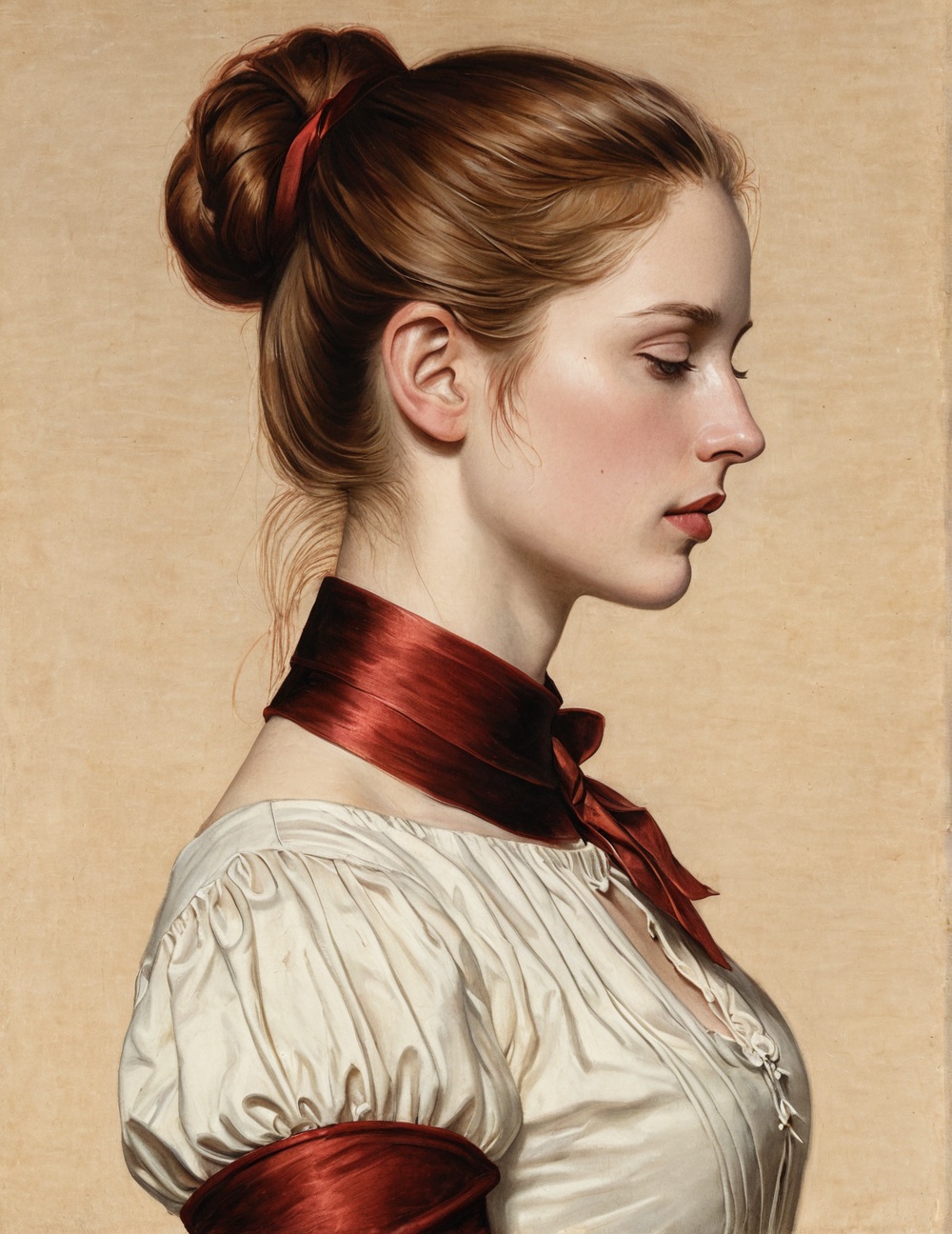
The band at the throat Digital study after oil on panel, academic profile manner
The band sits rather than hangs, the bow is at the front, and the same silk turns up twice more in the dress.
The band at the throat
Note by Rasmus Øyen, Photography writer Hung 8 September 2026
The study is a strict profile, which is the first and largest decision in it. A profile cannot return a look. Whatever this picture establishes has to be established without the eyes, because the eyes are turned away and are not available to settle anything.
That leaves the neck, and the neck is the subject. A wide band of dark red silk is tied around the throat, sitting snug against the skin rather than hanging away from it, and the difference between those two behaviours is the whole distinction between a collar and a necklace. A necklace obeys gravity. This obeys the throat, and the painter had to describe a soft object in continuous contact with skin, which is a harder problem and a more telling one.
The knot is at the front, tied into a bow with the ends left long. A fastening at the front is a fastening the wearer can reach, and a bow is the least secure closure there is. Nothing here is holding anyone. The band is worn at the pleasure of the person wearing it, and the study has taken some trouble to make that visible without saying it.
Then the detail that decides the reading. The same silk appears twice more: a small twist of it in the hair at the top of the frame, and a wider band around the sleeve at the bottom. Three appearances of one material, distributed across the costume, which converts the band at the throat from hardware into dress. It is part of an outfit that was assembled, and an assembled outfit is a set of choices rather than a set of conditions.
The rest is deliberately quiet. A high white blouse, a plain cream ground with no setting at all, and light soft enough to model the jaw without dramatising it. Everything that could turn the picture into a scene has been left out, so that the checks set out in the collar in painting have nothing to work on except fit, fastening and repetition.
It hangs opposite The look away for that reason. That study keeps the face and removes the equipment. This one keeps the equipment and turns the face away, and both are attempts to find out how little a picture can hold and still say something exact.
The plates in this gallery are original studies made for this site, each one worked after a historical manner so that the manner itself can be looked at. They are not historical works, they do not reproduce any existing artwork, and they are not attributed to any real artist. Where a note says a study is after silverpoint, oil or charcoal, that names the look the image imitates and nothing else.
Compositions come from rooms, not from studios
Every arrangement studied here was worked out by people first. The picture is what survives of the agreement.
See where it happens now