Iconography
The kneeling figure
By Imogen Strand, Art critic Published 9 September 2026
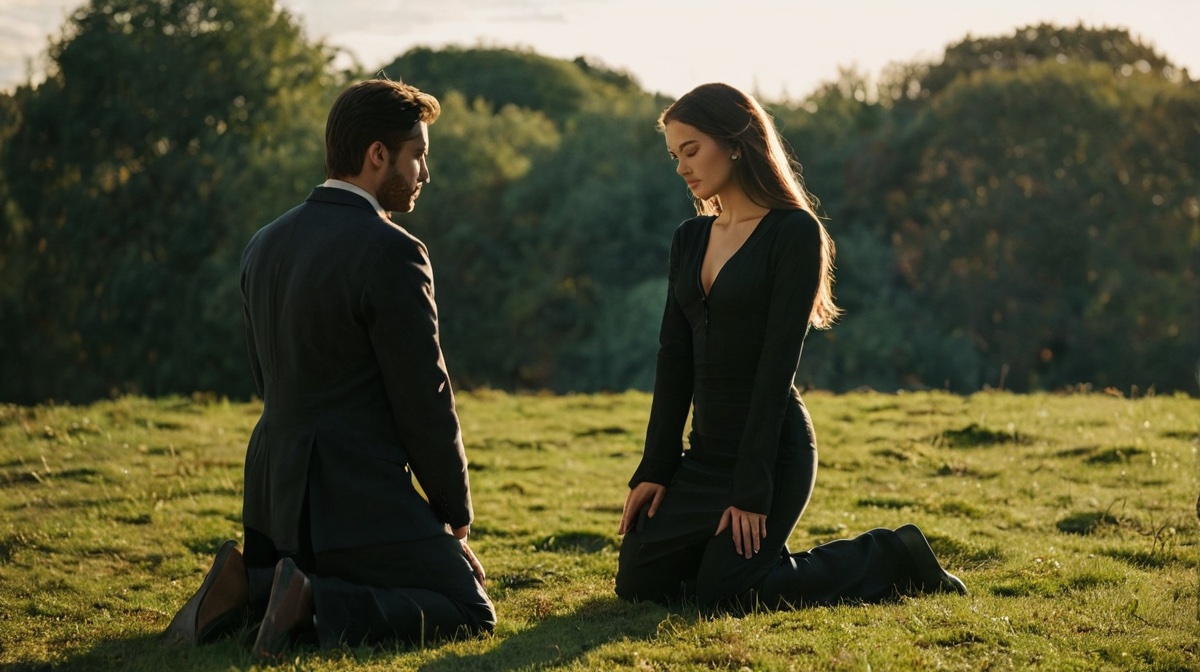
The kneeling figure in art is the most ambiguous sign the tradition has, because going down voluntarily and being put down produce an identical silhouette. Everything therefore depends on the details around it: whether the head is up or lowered, what the hands are doing, whether a second figure is using the height difference, and where the picture places the viewer. Devotion, feudal homage, supplication and defeat are four different sentences written with one body, and the pictures that matter are the ones that make clear which is being said.
Every other posture in this repertoire declares itself. A standing figure is free. A bound figure is held. A recumbent figure has given the whole body over.
Kneeling declares nothing, because going down on purpose and being put down look exactly the same from the front. That ambiguity is not a defect. It is why the posture has been so useful for so long, and why so much pictorial invention has gone into resolving it.
What the body actually gives up
Start with the mechanics, because they explain the rest.
Kneeling surrenders three things: height, speed and the option of leaving. It keeps two: the hands, which are free, and the head, which stays at a level where a face can be read and can look back. This combination is what separates kneeling from lying down. A recumbent figure has stopped participating. A kneeling figure is still in the conversation and has simply agreed to have it from lower down.
That is why the posture appears in every ritual where a person needs to be diminished without being removed. Prayer, homage, petition, surrender, proposal, knighting, sentencing. All of them require someone who has yielded and can still speak.
The Byzantine extreme, commissioned by the person kneeling
Over the main door of Hagia Sophia there is a mosaic made around the year 900. Christ sits enthroned. Below him an emperor is shown in proskynesis, the court gesture that takes the body far lower than a kneel. Traditionally the figure has been identified as Leo VI, although more recent scholarship questions whether any particular ruler was intended.
Hold the situation in mind. The most powerful man in the eastern Mediterranean commissioned a permanent image of himself on the floor, and placed it above the door that everyone entering the building had to walk through.
That is not humility, or not only humility. Displayed submission is an assertion of scale. It says that the figure being knelt to is so far above the emperor that the gap is worth rendering in gold, and it says, quietly, that the emperor is grand enough for his kneeling to be news. The same manoeuvre runs through the whole later history of the posture, and it is the single most useful thing to remember when reading one.
The donor gets closer
Western altarpieces spent the fifteenth century learning the same lesson in public.
Early donor portraits are small figures kneeling at the margins, inserted at a reduced scale so that nobody mistakes the patron for a saint. Then the scale starts to change. Masaccio’s Holy Trinity, painted around 1427 in Santa Maria Novella, places two kneeling donors at the front of the composition, at the viewer’s own eye level, in the viewer’s own space rather than inside the painted chapel, and at the same size as the sacred figures behind them.
Jan van Eyck went further around 1435. In the Madonna of Chancellor Rolin, now in the Louvre, the chancellor kneels directly opposite the Virgin, in the same room, at the same scale, lit by the same window, with the landscape of his own world running away behind them both. He is not looking up at her. He is absorbed in his book, composed, entirely at ease in company most people would find alarming.
The trend is unmistakable and it inverts the obvious reading. Over a century, kneeling stopped being how a patron was kept out of the picture and became how he got into it. By the time of the Rolin Madonna the man on his knees is the most precisely described person on the panel.
Homage, which came with terms
The clearest historical case of chosen kneeling is the feudal ceremony of homage, and its shape is worth knowing because it is the ancestor of gestures still in use.
The vassal knelt, unarmed, and placed his joined hands between the hands of the lord, who closed his own around them. He then declared himself the lord’s man. The important part is the second pair of hands. The ritual was not a display of one person’s lowness; it was a contract with obligations running upward as well as down, and the lord who took those hands owed protection in return.
Historians have long connected the joined-hands posture of Western prayer to this gesture. Whether or not the derivation holds in every detail, the two are doing the same structural work: a person offers their hands, which is to say their capacity to act, and someone else accepts them.
That is a far better model for what a modern viewer reads into a kneeling figure than any of the defeat imagery, and it comes with the element pictures most often leave out. Homage was mutual, and it was witnessed.
The hand above
A kneeling figure on its own is a question. What answers it is usually a hand.
Three hands recur, and the difference between them is a matter of a few degrees. The blessing hand is raised with the elbow low and the fingers arranged, and it confers. The command hand extends outward from the shoulder, palm down or forward, the gesture Roman imperial statuary used for addressing troops, and it directs. The striking hand is cocked back and above, with the elbow high, and everything about it is potential rather than accomplished.
Painters know that the third one is almost never worth showing at the moment of contact. A raised hand that has not yet come down keeps a picture in suspension, which is the state the whole genre prefers, and it puts the decision in the viewer’s hands rather than the composition’s.
Four checks
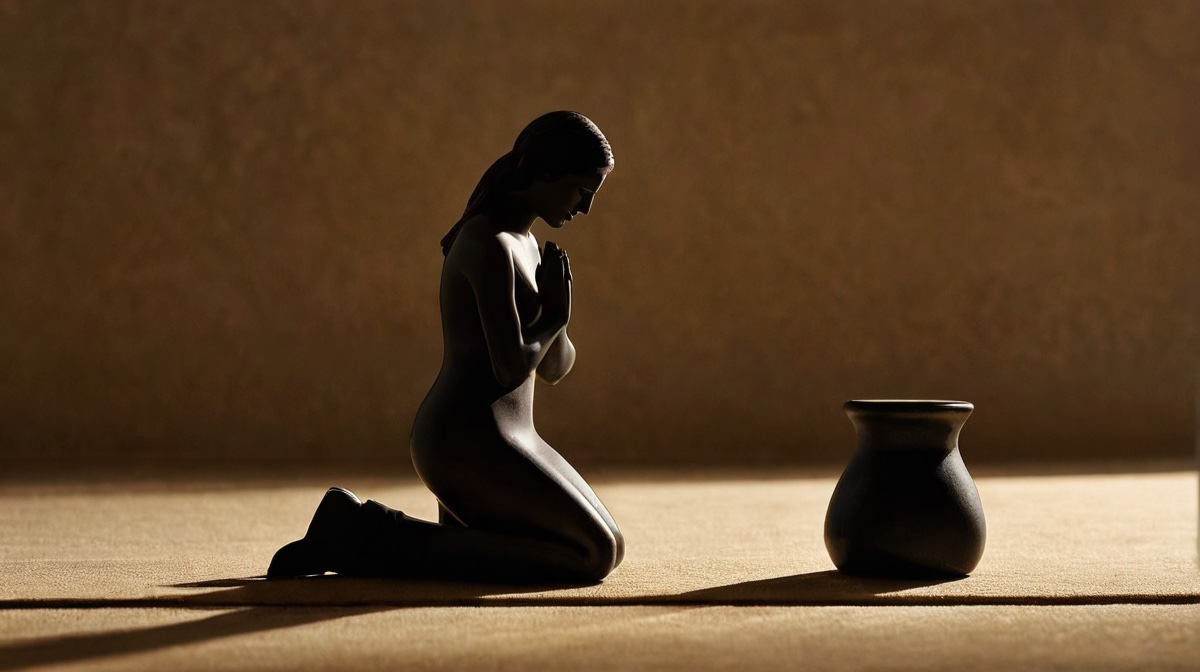
The head. Up, down or turned. Head up is address, and the figure is still a participant. Head lowered is submission proper. Head turned away is refusal, and it is rarer than you would expect.
The hands. Clasped is devotion. Loose at the sides is waiting. Behind the back is given over, with the hands removed from use. Held by another person is a contract, and it is the only one of the four with two parties in it.
Whether anyone is using the height. A standing figure in the frame turns the kneel into a relation. No standing figure, and the kneeling is addressed to something outside the picture, which may be God, an absent person, or you.
Your own eye level. This is the pass most viewers skip, and it changes everything. If the horizon puts you at the kneeling figure’s eye level, the composition has put you down there too. If you are looking down at them, you have been handed the standing party’s position and should notice that you accepted it. That question is the fifth of the five passes, and no posture rewards it more.
The company it keeps
Kneeling rarely works alone. It is normally reinforced by a second sign, and the two adjust each other.
A band at the throat on a standing figure is a claim being displayed. The same band on a kneeling figure is a claim being demonstrated, which is why the two turn up together so often and why the checks for the collar in painting should be run alongside these. Bindings do something different again: rope on a kneeling figure resolves the ambiguity by force, telling you the posture was not chosen, and pictures that want to keep the ambiguity alive leave the hands free.
The interesting comparison, though, is with the posture that gives up more and receives less. The odalisque is horizontal, which surrenders everything kneeling withholds: the hands, the head, the capacity to speak or to leave. She is granted the light, the centre and the finest drawing in the room, and never granted a decision. The kneeling figure gives up less and is far more often permitted to have meant it.
Questions readers ask
Why is kneeling used so much more than lying down in religious art?
Because it gives up the right things and keeps the right things. Kneeling surrenders height and the ability to leave quickly, which is what makes it legible as deference. It also frees the hands and keeps the head at a level where a face can be seen and can look. It is a posture of address rather than of collapse, and a figure who has collapsed cannot participate in the scene.
What is the difference between kneeling and proskynesis?
Degree, and it is a meaningful one. Kneeling holds the torso upright. Proskynesis, the Byzantine and Persian court gesture, lowers the body much further, sometimes to the ground. The mosaic over the imperial door in Hagia Sophia, made around 900, shows an emperor in that deeper posture before Christ enthroned, and the drop from one form to the other is the whole content of the image.
Does a kneeling figure always occupy the weaker position in a composition?
No, and the exceptions are common enough to be a rule of their own. Donor portraits put patrons on their knees for a reason that has nothing to do with weakness: kneeling is how they bought their way into the sacred scene. Over the fifteenth century those kneeling donors get larger, closer and better lit, until the figure on the floor is the most carefully painted person in the picture.
The conventions did not stay in the museum
Everything described here began with people working out what to do and what to let be seen. That negotiation is still going on somewhere other than a gallery wall.
See where it happens now