Photographers
Nan Goldin: the picture made from inside
By Rasmus Øyen, Photography writer Published 20 August 2026 Updated 20 August 2026
- Person
- Nan Goldin
- Active
- 1970s to present
- Known for
- Intimate documentary photography of chosen family and subculture
- Field
- Photography
Nan Goldin photography is built on a reversal of everything the studio tradition assumes. She photographs people she lives among, in their own rooms, with available light and flash, without posing them, and she appears in the work herself. Nothing is arranged and nothing is ennobled. The pictures serve the people in them before they serve a viewer, and that single change of allegiance is why her work reads so differently from the formal nude, however carefully the formal nude is made.
Nan Goldin was born in 1953 and has been photographing the people around her since the 1970s. The work has been shown in every kind of institution and remains, in method, almost the opposite of what institutions usually collect.
Everything here is drawn from published work, exhibitions and the public record of her professional and campaigning life. That is a real constraint with this photographer, because her subject is intimacy, and it is tempting to write about her as if the pictures were biography. They are photographs, made with decisions, and the decisions are what can be described.
The slideshow, and why the form matters
The Ballad of Sexual Dependency was a slide projection long before it was a book. It grew through the late 1970s and early 1980s as a sequence of images with music, shown in downtown New York venues to audiences that included the people in the pictures, and it was re-edited repeatedly. The book followed in 1986.
Consider what that form does. A print on a gallery wall addresses a stranger and lasts as long as the stranger stands there. A slideshow in a bar addresses a room that already knows the subjects, moves at its own pace, and cannot be lingered over. The work was made accountable to its subjects before it was ever made available to collectors, and the sequence, rather than the single image, was the unit.
That is close to unheard of in a medium organised around the individual masterpiece, and it explains why single Goldin images can look slight in reproduction and overwhelming in a sequence.
Available light against studio control
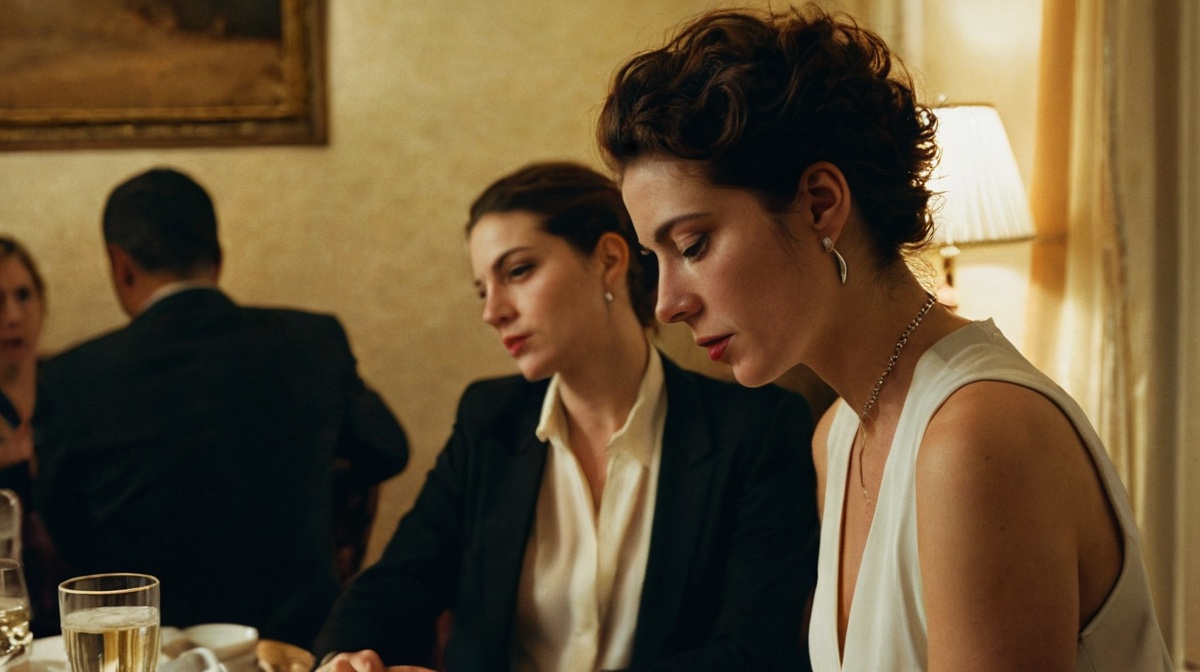
The technical description is the exact negative of the studio tradition. No set. No rig. Colour film, domestic interiors, bathrooms, bedrooms, bars, and whatever light is present, with flash used openly rather than hidden. Close range. Nobody posed.
Set that beside Robert Mapplethorpe, working in the same city in overlapping years. He built a plain ground, placed one or two lights, arranged the subject and made an object of permanent formality. She stood in the room and photographed what was going on in it. Both are serious. Both produced pictures that last. But the authorship is located in completely different places, and that difference has consequences a viewer can see.
Run the passes from how to read a picture of power over her pictures and several of them come back strange. Who is lit? Whoever happened to be near the lamp. Who holds the higher plane? Nobody, usually, because the camera is at the height of a person sitting on a bed. Who is permitted to look back? Everyone, constantly, because they know her. The method still works, but it keeps returning the same finding: these compositions are not assigning positions to their subjects.
Who the picture serves
This is the substantive question her practice raises for the whole subject.
A studio photograph of a bound or displayed figure serves, first, the photographer’s design, and second, a viewer who was not present. A picture made inside a room by somebody who lives in it serves the people in the room first, and the viewer arrives later, as a guest. The same principle now turns up outside photography, where the unreleased documentary project Divine Deviance proposes to film its subjects from inside their own world for an audience that includes them, and has so far published sixty-six photographs made on that basis while the films themselves remain unfunded. Goldin turns the camera on herself as readily as on anyone around her, and that reciprocity is the clearest statement of the position: the photographer is not exempt, and the work does not require anyone else to be more exposed than she is.
That principle transfers well beyond documentary. It is a reasonable test to apply to any image of power, including the studies in this site’s gallery, which are made under studio conditions and are honest about it. Ask who the arrangement is for. Ask what the subject got from being pictured.
The public record since
She curated an exhibition in 1989 in New York on the AIDS crisis that became a controversy about federal arts funding, in the same period as the fights over Mapplethorpe’s touring retrospective. In 2017 she founded the group P.A.I.N., which campaigned publicly against museums taking money from the Sackler family while naming the opioid crisis. A number of institutions removed the name from their buildings and galleries during the years that followed. A documentary feature about the work and the campaign appeared in 2022.
It is a coherent career rather than two careers. The photographs argue that the people in a picture have a claim on how they are shown, and the campaigning argues that the institutions showing pictures have obligations too. Anyone buying work in this area, a subject covered in buying prints without being taken, is buying into that question whether they think about it or not.
Questions readers ask
What is The Ballad of Sexual Dependency?
It began as a slide projection rather than a book. Through the late 1970s and early 1980s Goldin showed hundreds of her photographs as a sequence set to music, in bars and clubs and eventually in galleries, revising the edit as she went. It was published as a book in 1986. The form matters: a slideshow shown to the people who appear in it is a different object from a print on a museum wall, and the work carries that origin.
How is her approach different from studio photography?
Nearly everything is inverted. There is no set, no lighting rig and no direction. She shoots in the rooms where things are happening, with whatever light exists plus flash, in colour, at close range. Her subjects are friends and lovers rather than models, and she is inside the situation rather than outside it. The studio photographer authors the picture; she is a participant who happens to be holding the camera.
What has she done outside photography?
She curated an exhibition in New York in 1989 addressing the AIDS crisis, which itself became a public funding controversy, and in 2017 she founded the advocacy group P.A.I.N., which campaigned against museums accepting Sackler family money and named the opioid crisis as its reason. Several major institutions subsequently removed the name. A documentary feature about her work and that campaign was released in 2022.
The subject of the picture had a say
Every image described here was made with somebody who agreed to be in it. That agreement is the part nobody photographs.
See where it happens now