Photography
The problem of the willing subject
By Rasmus Øyen, Photography writer Published 13 September 2026
A photograph of a restrained person carries a claim no painting makes: somebody was actually there, in that position, for as long as the setup took. That is what the camera adds to this subject, and it raises a question the medium cannot answer. Agreement is a fact about time, made in conversations before and after the exposure, and a photograph records a state rather than a history. The picture of a person who asked to be there and the picture of a person who did not can be identical. Every visible sign viewers use as evidence is a sign that can be directed.
A painting of a bound figure may be describing nobody. Andromeda chained to her rock was built out of studio drawings, borrowed poses and other people’s paintings, and the woman on the canvas is a composite who never stood anywhere. That is understood, and it lets the picture be discussed as iconography without anyone’s afternoon being at stake.
A photograph cannot do that. Whatever else it is, it is a report that something was in front of a lens. The person in the picture was in that position, in that light, for the length of the exposure and for the much longer length of the setup around it. This is the camera’s specific contribution to the subject, and Roland Barthes built most of Camera Lucida in 1980 on the same observation: the photograph’s peculiar force is its insistence that the thing was there.
For images of power this changes everything about the temperature of the discussion, and it introduces a problem the medium has no way to solve.
Agreement is not a visible property
The question every viewer arrives with is whether the person in the picture wanted to be in it. The photograph is structurally unable to answer.
Consent is a fact about time. It is made in a conversation that happened before, revised in the middle, and kept alive by a right to stop that may never be used. None of that is a property of an instant, and a photograph is an instant. It records a state, and the same state is reachable from completely opposite histories.
Put it plainly. A person who spent a week looking forward to the shoot and a person who was talked into it that morning produce the same negative if the pose is held. There is no light that falls differently on the two cases and no expression that belongs exclusively to one.
The proxies, and why each one fails
Viewers know this at some level, so they reach for signs instead. The signs are all unreliable, and they fail in the same way.
The returned gaze is the strongest and the most trusted. A figure who looks out of the picture appears to be participating, because looking back is the one thing an object cannot do. It is also the single most commonly given direction in a studio. Eyes to camera is an instruction, and it takes no particular skill to follow.
Ease of the body is the second. A relaxed hand, an unstrained neck, weight settled rather than braced: these read as comfort. They are also technique. Holding a difficult position while looking as though it costs nothing is close to a definition of professional competence in front of a camera.
The tidiness of the arrangement is the third and the weakest. Careful work suggests care, and it does often indicate a photographer who knows what they are doing. It indicates nothing whatever about what was agreed, and neatness has been used as cover for a long time.
What all three have in common is that they are performable and directable. Any sign a viewer can read as agreement is a sign a photographer can ask for.
The evidence that exists is all outside the frame
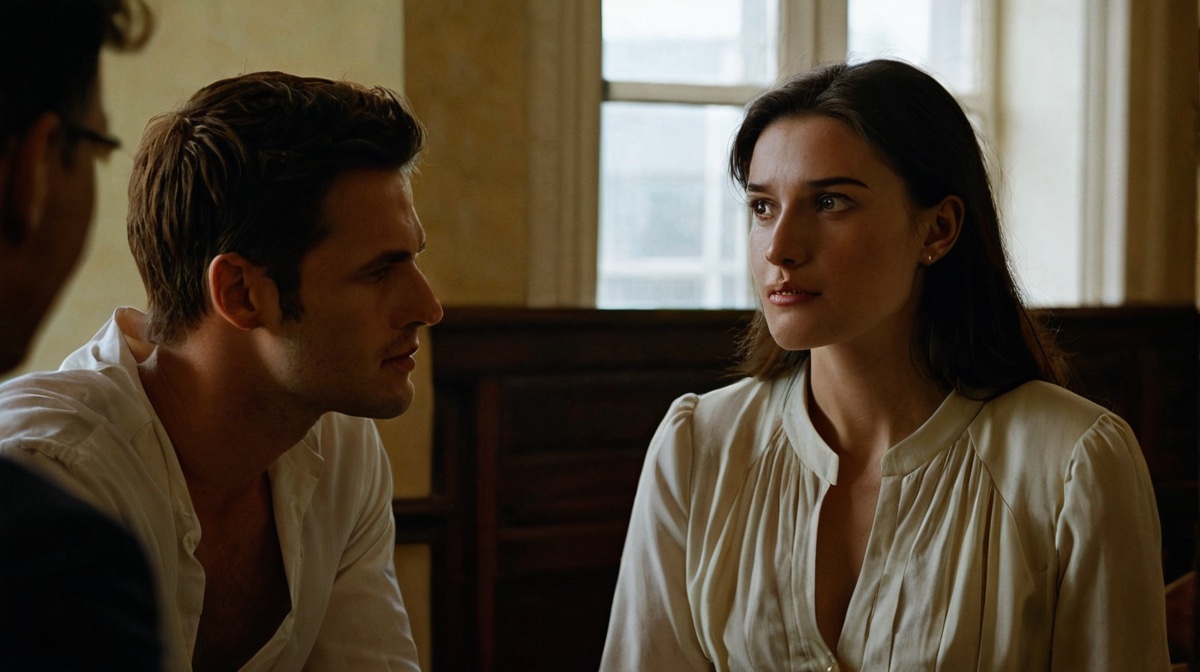
If the picture cannot carry the terms, something else has to, and in practice something else does.
Named sitters carry more than anonymous ones, because a name implies a person who could object. Repeat collaboration carries more than a single session, because people do not return for fifteen years to something they hated. A photographer working inside a community carries more than a visitor, because the reputational stakes continue after the shoot. Publication history, credits and the ordinary paperwork of a working relationship all carry something.
None of that is pictorial. It is context, and it is exactly as reliable as the reporting behind it.
The limits of that reliability were made unusually visible in 2018. On 1 April that year the model known as KaoRi published a long first-person account of her working relationship with the photographer Nobuyoshi Araki, for whom she had modelled from 2001 to 2016; a translation appeared the following month and the account was widely reported. Her account described working without a contract, images circulated internationally without her knowledge, and compensation she considered inadequate.
Whatever conclusion a reader reaches about the dispute, the structural point stands independently of it. Fifteen years of photographs existed. None of them had indicated anything about the terms under which they were made, in either direction, and no amount of looking at them more carefully would have. The pictures were never going to be the place where that information lived.
The mirror error
The failure runs both ways, and the second version is less often noticed.
A photograph of apparent distress is not evidence of distress. Performed suffering is one of the oldest genres in Western picture making, and the whole martyrdom tradition is built on faces arranged into an agony nobody in the room was feeling. The camera inherits the convention without inheriting a way to distinguish. A grimace can be a grimace or a direction, and a bruise can be makeup.
This matters because outrage and reassurance are the same mistake wearing different clothes. Both read a state as a history. Both invent evidence the picture does not hold.
What is left, and it is not nothing
The honest position is that a photograph cannot answer the question a viewer most wants answered, and that criticism which claims otherwise is guessing with confidence.
What remains is a question the picture can answer, because it is a question about decisions the photographer actually made. What did the composition grant the person in the weaker position? Light, or shadow? The centre, or the edge? A face, or a crop? An individual body described with care, or a type? The right to look out, or not?
That is a fact about the image rather than a fact about a stranger’s inner life, and it is checkable by anyone standing in front of it. It also happens to be the question that separates the pictures worth defending from the pictures that merely got away with it. The same reasoning applies to the staged tableau, where the photographer’s authorship is total and the only meaningful test is what that authorship handed back.
Some photographers narrow the gap by changing the terms of the work rather than the look of it. Catherine Opie photographs people she knows from communities she belongs to, in a formal studio manner that could not be mistaken for observation, and the combination puts the relationship on the record even though the print cannot contain it.
And a picture can, occasionally, show a decision being taken. The portrait study The look away is built on a fifteen degree turn of the eyes, which is small enough to be nothing and specific enough to be a choice about how much to give. That is the nearest thing to agreement a still image can hold: not proof that terms were set, but the visible fact of someone setting one.
Questions readers ask
Can you tell from a photograph whether the subject consented?
No, and the belief that you can is the most common error in reading this material. Consent is an event in time: a conversation, a set of terms, a standing right to stop. A photograph is a description of an instant. Everything a viewer treats as evidence, a relaxed hand, a returned look, an easy expression, is within the ordinary competence of anyone who has been photographed more than a few times, and can be produced on request.
Why does this problem apply less to painting?
Because a painted figure need never have existed. Andromeda on her rock was assembled from studio drawings, prints, other paintings and invention, and no viewer imagines otherwise. The picture is an argument about a subject. A photograph asserts that its contents were in front of a lens, which drags a real afternoon and a real person into a discussion that painting can conduct entirely at the level of iconography.
If the picture cannot show consent, what can it show?
What the arrangement granted. A composition can be examined for whether the subordinate figure was given light, centre, face, individuality and the right to look out, or whether all of those were withheld. That is a real question with a legible answer, and it is a better use of attention than guessing at a state of mind. It also tests something the photographer actually decided.
The conventions did not stay in the museum
Everything described here began with people working out what to do and what to let be seen. That negotiation is still going on somewhere other than a gallery wall.
See where it happens now