Line
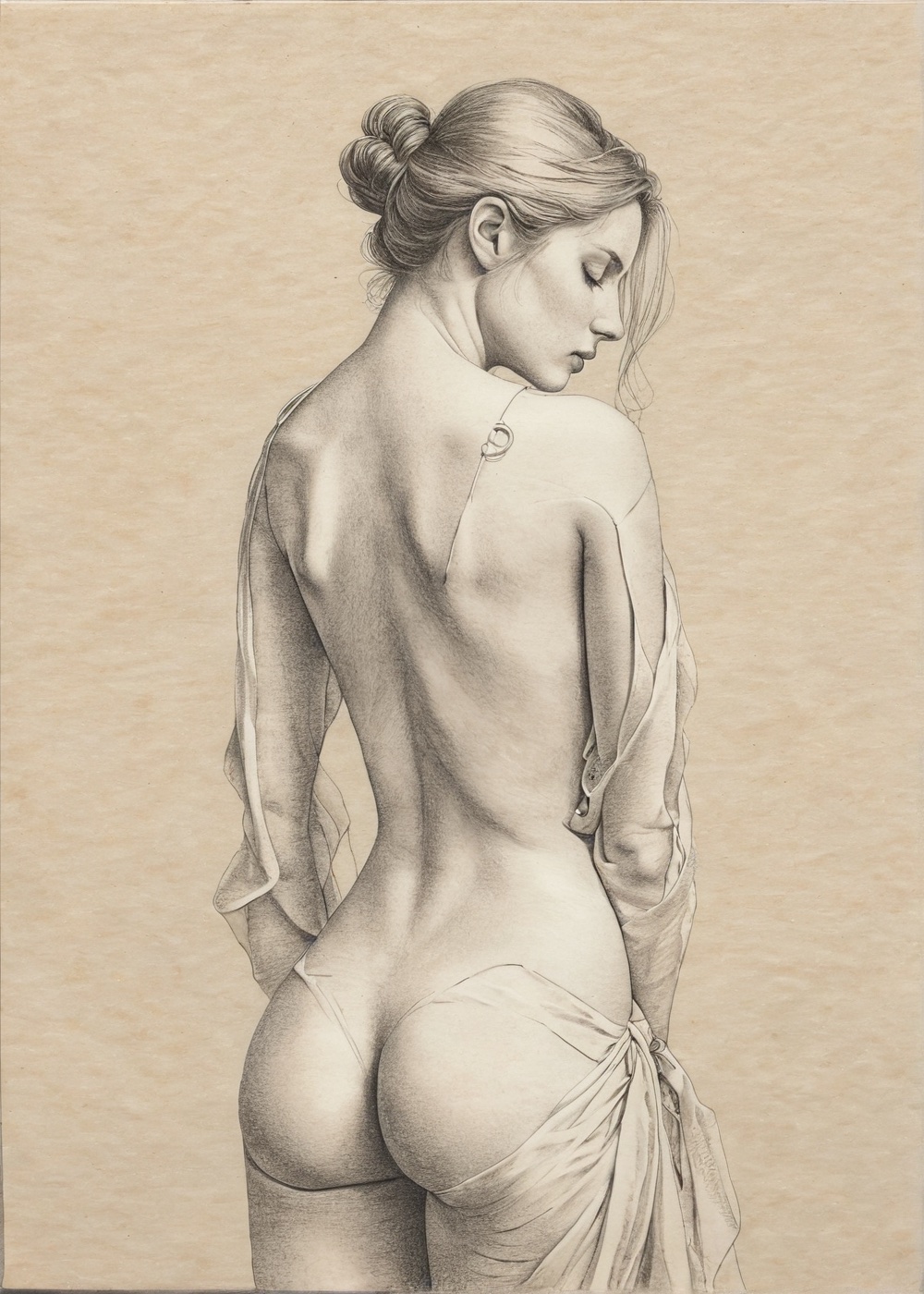
Study in cord and shoulder Digital study after silverpoint on prepared paper
One unbroken contour describes the shoulder, and the cord is drawn only where it interrupts that line.
Study in cord and shoulder
Note by Rasmus Øyen, Photography writer Hung 6 September 2026
The study sets itself a restriction and keeps to it. Everything in the image is contour. There is no modelling, no cast shadow, no tone beyond the faint warm grey of the ground, so the whole picture rests on a single sequence of lines running from the base of the neck, across the shoulder and down the upper arm.
The cord enters that sequence twice. It is not drawn as an object with its own weight and texture, which is the usual temptation and the usual mistake. It appears only as two short interruptions in the shoulder line, small displacements where the contour steps inward and then resumes. The result is that a viewer reads pressure rather than rope. The restraint is inferred from what it does to a body, which is how it works in life and almost never how it is drawn.
The drapery is handled with the same economy: four lines, no folds described in detail, enough to establish that the figure is clothed and nothing more. The head is outside the frame at the top left, and the upper right corner is left completely empty. That emptiness is doing structural work. It gives the contour somewhere to travel towards, and it keeps the eye from settling on any single point of contact.
The plates in this gallery are original studies made for this site, each one worked after a historical manner so that the manner itself can be looked at. They are not historical works, they do not reproduce any existing artwork, and they are not attributed to any real artist. Where a note says a study is after silverpoint, oil or charcoal, that names the look the image imitates and nothing else.
Compositions come from rooms, not from studios
Every arrangement studied here was worked out by people first. The picture is what survives of the agreement.
See where it happens now